Scholars and human rights advocates at the European Academy of Religion conference in Rome express concern over the detention of Shincheonji Chairman Lee Man-hee, urging South Korea to uphold international human rights standards.
European scholars of religion and human rights advocates are calling on the South Korean government to release Lee Man-hee, the 95-year-old Chairman of Shincheonji Church of Jesus, who remains in pretrial detention.
Lee was detained on 24 June and indicted on 29 June on charges including alleged violations of the Political Parties Act. According to the Joint Police–Prosecution Investigation Headquarters, Lee directed the mass registration of approximately 50,000 church members into a particular political party between July 2021 and January 2024.
Shincheonji Church disputes the allegations, stating that individual members exercised their political rights independently and voluntarily. The church also emphasized that both Lee and the organization fully cooperated with investigators throughout the investigation, including searches and seizures. It further argued that detaining a 95-year-old religious leader effectively amounts to a form of physical punishment.
European Scholars Raise Human Rights Concerns
The issue was discussed during the Ninth Annual Conference of the European Academy of Religion (EuARe), held in Rome, Italy, on 3 July. During a session titled “Shincheonji, a Korean New Religion in Global Context,” scholars presented academic research on Shincheonji Church and addressed recent developments surrounding the church in South Korea, including Lee’s detention.
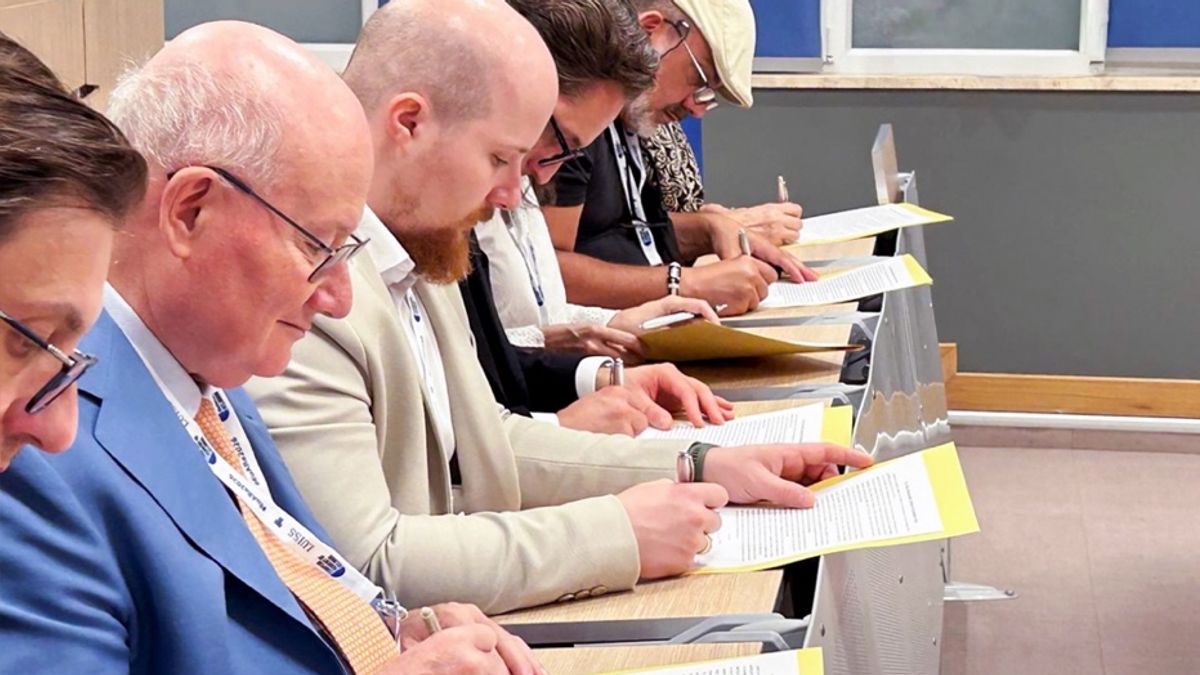
Religious scholars signing an appeal requesting an end to Chairman Lee’s detention.
Dr. Massimo Introvigne, sociologist of religion and Founder and Managing Director of the Center for Studies on New Religions (CESNUR), questioned the necessity of imprisoning an elderly defendant facing non-violent charges.
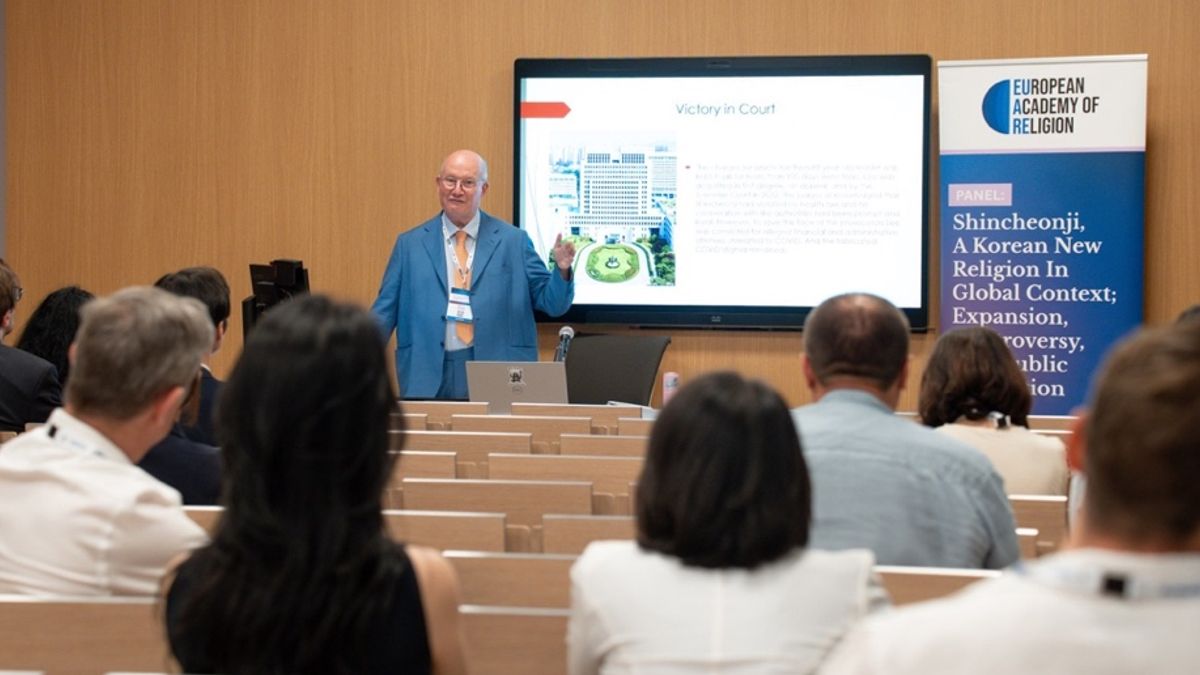
Dr. Introvigne as a speaker at the European Academy of Religion’s international conference held on 3 July
“In all European Union countries, legislation mandates that those older than 80 should only exceptionally be put in jail. If restrictions are necessary, house arrest is generally preferred, and imprisonment is typically reserved for violent crimes where there is a genuine risk of further violence. Here, the accusations concern alleged violations of electoral law, not violent offenses.”
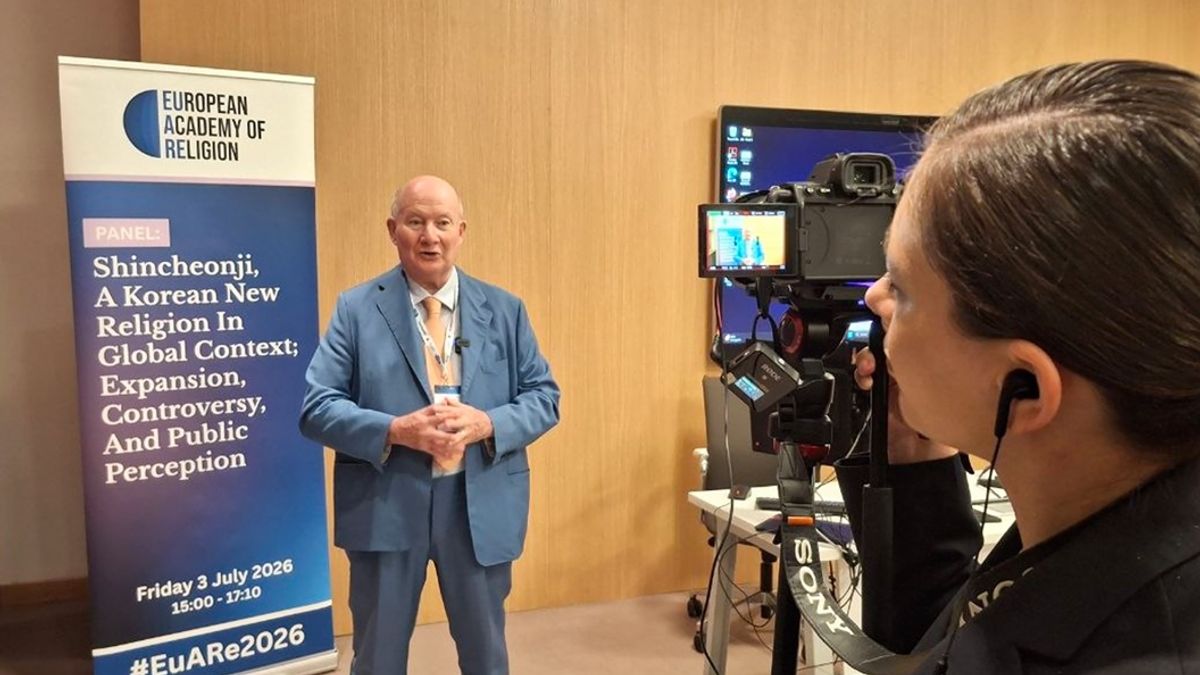
Dr. Massimo Introvigne, the Founder and Managing Director of CESNUR
He further argued that the detention conflicts with internationally recognized standards for the treatment of elderly detainees.
“What Korea is doing to this elderly religious leader is in violation of international law, including the United Nations’ Mandela Rules, which provide that pretrial detention should be exceptional and particularly limited for elderly prisoners. What is happening is an unmitigated scandal that reflects a political and religious vendetta.”
Eric Roux, President of the European Interreligious Forum for Religious Freedom (EIFRF), also urged South Korean authorities to reconsider the detention.
“A man of 95 years old being put in jail is not something that can be reconciled with respect for human dignity. Even if the allegations were true, imprisoning someone of this age raises serious humanitarian concerns. I urge the authorities to review this decision promptly to avoid damage to South Korea’s international reputation.”
Eric Roux, President of EIFRF
Human Rights Lawyer Voices Concern
Human rights lawyer Alessandro Amicarelli, a solicitor of the Senior Courts of England and Wales, a barrister in Italy, and Chairman of the European Federation for Freedom of Belief (FOB), described the situation as troubling for a country widely regarded as a democratic nation committed to protecting human rights.
“As a human rights lawyer, I have always considered South Korea a true democracy where human rights form the foundation of its democratic system. Unfortunately, what is happening now is deeply concerning. We cannot accept that a 95-year-old religious leader should be subjected to this kind of pressure.”
He added:
“What we are witnessing appears to indicate a departure from South Korea’s constitutional principles and its longstanding commitment to human rights. For this reason, I support Shincheonji in its efforts to challenge what it considers abuse and religious persecution.”
Alessandro Amicarelli, Chairman of FOB
International Attention Continues to Grow
According to Shincheonji Church, Lee’s detention has evolved beyond a domestic legal matter and has become the subject of international human rights concern.
The church noted that two international human rights organizations—United for Human Rights and the Coordination des Associations et des Particuliers pour la Liberté de Conscience (CAP-LC)—submitted a joint written statement to the 62nd session of the United Nations Human Rights Council on 25 May (Document No. A/HRC/62/NGO/236, circulated on 10 June).
According to the statement, the organizations argued that the situation involving Shincheonji in South Korea has intensified and that treating church members’ political party registration as evidence of “religion–politics collusion” is inconsistent with the International Covenant on Civil and Political Rights (ICCPR), which guarantees citizens the right to participate in political life.
The statement also expressed concern that a joint police–prosecutor task force established in December 2025 was explicitly directed at Shincheonji and criticized public remarks by senior officials referring to the church as a “criminal organization,” arguing that such statements are incompatible with the principle of the presumption of innocence. The organizations urged the South Korean government to reaffirm its commitment to freedom of religion, non-discrimination, and state neutrality.
Shincheonji Church stated that support from international scholars, human rights advocates, and other public figures continues to grow, increasing international attention on Lee’s detention.
“The prompt release of Chairman Lee is a matter of protecting freedom of religion and fundamental human rights, which are among the core values of a democratic society,” the church said.